What Are Mullite Insulating Fire Bricks?

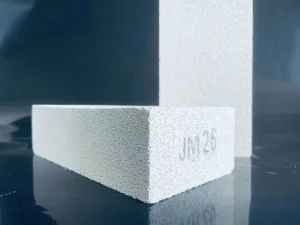
Mullite Insulating Fire Bricks are manufactured from mullite, with their key features stemming from their high porosity. The porosity is achieved during production through the addition of materials like:
Polystyrene microspheres or fine organic substances (e.g., sawdust), which burn out during firing.
Foaming agents for slip casting instead of dry pressing.
Lightweight aggregates such as diatomite or haydite.
This high porosity results in lower thermal conductivity and reduced heat capacity compared to other refractory materials.
Classification of Mullite Insulating Fire Bricks
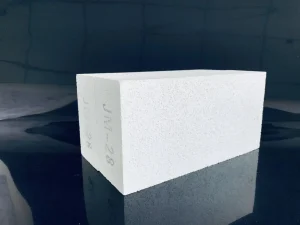
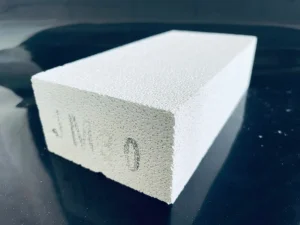
The ASTM classification system designates these bricks with numbers reflecting their nominal service temperature in degrees Fahrenheit:
20, 23, 26: Suitable for low- to medium-temperature applications.
28, 30, 32:Suitable for higher-temperature applications.
For safety, a 150-200°F buffer is typically added to the nominal service temperature when selecting the right brick for your needs.
Applications of Mullite Insulating Fire Bricks
These bricks are versatile and can serve as both backup materials and working linings in various furnaces where abrasion and molten metal interaction are not a concern. Below is a breakdown of their recommended uses based on the ASTM classification:
IFB2300 (INS JM23): Suitable for low-temperature furnaces, drying furnace linings, and back linings.
IFB2600 (INS JM26): Commonly used in annealing furnaces, carburizing furnaces, galvanizing furnaces, roller kilns, and cracking furnaces.
IFB2800 (INS JM28): Ideal for both inner and backup linings in various high-temperature furnaces, including annealing and galvanizing furnaces.
IFB3000 (INS JM30): Widely utilized for ceramic furnaces, cracking furnaces, hot blast stoves, and annealing furnaces.
IFB3200 (INS JM32): Suited for extreme high-temperature applications in ceramic kilns, cracking furnaces, and hot blast stoves.


Advantages of Mullite Insulating Fire Bricks
Fuel Efficiency: Their low thermal conductivity minimizes heat loss, saving fuel costs.
Faster Heat-Up: Reduced heat storage allows for quicker temperature stabilization.
Thinner Wall Construction: Enables achieving the desired thermal profile with less material.
Lightweight: Reduces the overall weight of the furnace.
Diverse Options: Available in varying thermal efficiencies and strengths to suit specific needs.
Additional Products and Applications
For specialized environments requiring higher strength or load-bearing capacity, high-purity Alumina Bubble Brick are available. These are ideal for:
- High-temperature ceramic kiln applications.
Corrosive environments, functioning as both hot face and backup lining materials.
Additionally, OSYMEN offers a comprehensive range of insulating solutions, including:
Insulating castables
Gunning mixes
Ceramic fiber products
These alternatives provide further options for enhancing furnace efficiency and performance.
Conclusion
Mullite Insulating Fire Bricks are a cornerstone in industrial furnace design, providing significant advantages in thermal insulation, energy efficiency, and structural flexibility. Whether used as backup materials or working linings, their lightweight, high porosity, and exceptional thermal properties make them indispensable for a variety of applications.
If you’re looking for high-performance insulation solutions, consider Mullite Insulating Fire Bricks to optimize your furnace operations and achieve superior energy savings.


 TOP
